Buy bodytherapy.eu ?
We are moving the project
bodytherapy.eu .
Are you interested in purchasing the domain
bodytherapy.eu ?
domain@kv-gmbh.de · 0541-91531010
Buy bodytherapy.eu ?
Which functions are not rational functions?
Functions that are not rational functions include trigonometric functions (such as sine, cosine, and tangent), exponential functions (such as \(e^x\)), logarithmic functions (such as \(\log(x)\)), and radical functions (such as \(\sqrt{x}\)). These functions involve operations like trigonometric ratios, exponentiation, logarithms, and roots, which cannot be expressed as a ratio of two polynomials. **
What are inverse functions of power functions?
The inverse functions of power functions are typically radical functions. For example, the inverse of a square function (f(x) = x^2) would be a square root function (f^(-1)(x) = √x). In general, the inverse of a power function with exponent n (f(x) = x^n) would be a radical function with index 1/n (f^(-1)(x) = x^(1/n)). These inverse functions undo the original power function, resulting in the input and output values being switched. **


Similar search terms for Functions
Top-Angebote
Products related to Functions:
-
Yellow Kite Crystals for Self-Care by Kirsty Gallagher - Hardback Guide to Crystal Healing Rituals for Love, Stress & WellbeingDiscover the world of crystal healing with this beautifully produced hardback guide from Sunday Times bestselling author Kirsty Gallagher. 'Crystals for Self-Care' offers an accessible entry point into crystal healing, blending clear foundational knowledge with practical, everyday rituals. The book is written for both complete beginners and seasoned spiritual seekers, providing a genuinely useful reference for those interested in crystal healing. Kirsty's warm and experienced voice guides readers through choosing, cleansing and working with crystals to support love, stress relief, work confidence and overall wellbeing. The book is structured in two clear parts, with Part One laying the groundwork for understanding crystals and their uses, and Part Two providing practical guidance on how to incorporate crystals into daily life. This comprehensive guide is perfect for anyone looking to learn more about crystal healing and how to use crystals for self-care.4,99 £*Shipping: 2,99 £Secure redirect to the provider
-
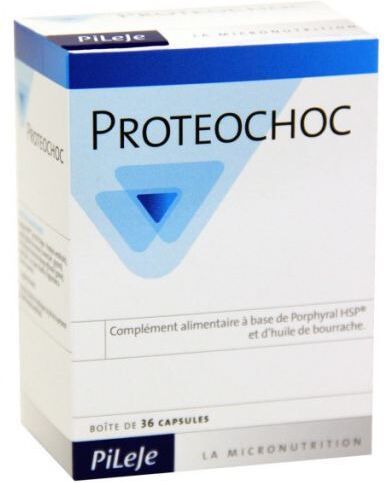
Pileje Proteochoc 36 capsules for the protection of cellular functionsNutrition and Supplements Special supplements Pileje Proteochoc 36 capsules for the protection of cellular functions - Protection of cellular functions. - Precautions: None described. - Dosage: 1-3 capsules per day.24,22 £*Shipping: 3,99 £Secure redirect to the provider


-
What are power functions and root functions?
Power functions are functions in the form of f(x) = x^n, where n is a constant exponent. These functions exhibit a characteristic shape depending on whether n is even or odd. Root functions, on the other hand, are functions in the form of f(x) = √x or f(x) = x^(1/n), where n is the index of the root. Root functions are the inverse operations of power functions, as they "undo" the effect of the corresponding power function. Both power and root functions are important in mathematics and have various applications in science and engineering. **
-
What are inverse functions of exponential functions?
Inverse functions of exponential functions are logarithmic functions. They are the functions that "undo" the effects of exponential functions. For example, if the exponential function is f(x) = a^x, then its inverse logarithmic function is g(x) = log_a(x), where a is the base of the exponential function. In other words, if f(x) takes x to the power of a, then g(x) takes a to the power of x. **
-
What are polynomial functions and what are power functions?
Polynomial functions are functions that can be expressed as a sum of terms, each of which is a constant multiplied by a variable raised to a non-negative integer power. For example, f(x) = 3x^2 - 2x + 5 is a polynomial function. Power functions are a specific type of polynomial function where the variable is raised to a constant power. They can be written in the form f(x) = ax^n, where a is a constant and n is a non-negative integer. For example, f(x) = 2x^3 is a power function. Both polynomial and power functions are important in mathematics and have various applications in science and engineering. **
-
'Parabolas or Functions?'
Parabolas are a specific type of function that can be represented by the equation y = ax^2 + bx + c. Functions, on the other hand, can take many different forms and can represent a wide variety of relationships between variables. While parabolas are a type of function, not all functions are parabolas. Therefore, the choice between parabolas and functions depends on the specific relationship being modeled and the form that best represents that relationship. **


How do parameter variations and power functions look in functions?
Parameter variations in functions can be represented by changing the coefficients or constants in the function equation. For example, in a linear function y = mx + b, varying the values of m and b will change the slope and y-intercept of the function. Power functions, on the other hand, have the form y = ax^n, where a is the coefficient and n is the exponent. Varying the values of a and n will change the steepness and curvature of the power function. Overall, parameter variations and power functions can be visually represented as changes in the shape, slope, and position of the function graph. **
What is the difference between exponential functions and polynomial functions?
Exponential functions have a variable in the exponent, while polynomial functions have a variable raised to a constant power. Exponential functions grow at an increasing rate as the input variable increases, while polynomial functions can grow at a decreasing rate or remain constant. Additionally, exponential functions never reach zero, while polynomial functions can have roots where the function equals zero. **
Top-Angebote
Products related to Functions:
-
DK Ayurveda: An Ancient System of Holistic Health to Bring Balance and Wellness to Your Life (A Little Book of Self Care)Make Ayurveda an indispensable part of your daily routine with this step-by-step guide to holistic balance and wellness. For a natural approach to self-healing, alternative medicine, and wellness, expert Sonja Shah-Williams has tailored remedies including Ayurveda recipes, skincare, yoga, and mindful meditation techniques. Harness the power of alternative therapies and discover: - What Ayurveda is and the benefits of the practice - Easy to follow, step by step illustrated guide to Ayurvedic practices - Ayurvedic super-foods and recipes - How to easily incorporate holistic practices into daily life - Positive affirmations, mindfulness techniques and exercises Modern science has proved the effectiveness of Ayurveda as a view of the world based on ancient beliefs that everything is connected and that balance is the key to wellbeing. Ayurveda focuses on the prevention of disease by focusing on anti-inflammatory diets, mindful meditation, and massages. This practical guide is an Ayurvedic consultation at your disposal. This little self-care book will take you on a breathtaking journey of holistic healing. It begins by unpacking what Ayurveda is and the benefits of the practice. This reference book includes wellness practices designed to uplift the mind, body, and spirit and healing treatments designed to address, relieve, and help cure a range of common conditions.4,95 £*Shipping: 1,99 £Secure redirect to the provider
-
Derbós Drenadepur facilitates the elimination functions of the bodyNutrition and Supplements Natural Extracts Derbós Drenadepur facilitates the elimination functions of the body How to use: 4 spoons a day dissolvedin 1,5 liter of water or 1 spoon before meals. Traditional use: The plant used in this drink are traditionally used as blood, skin, kidneys and liver purgative. Good for weight control diets, with an increase of water ingestion. Category : INTERNAL USE9,38 £*Shipping: 3,99 £Secure redirect to the provider
-
Which functions are not rational functions?
Functions that are not rational functions include trigonometric functions (such as sine, cosine, and tangent), exponential functions (such as \(e^x\)), logarithmic functions (such as \(\log(x)\)), and radical functions (such as \(\sqrt{x}\)). These functions involve operations like trigonometric ratios, exponentiation, logarithms, and roots, which cannot be expressed as a ratio of two polynomials. **
-
What are inverse functions of power functions?
The inverse functions of power functions are typically radical functions. For example, the inverse of a square function (f(x) = x^2) would be a square root function (f^(-1)(x) = √x). In general, the inverse of a power function with exponent n (f(x) = x^n) would be a radical function with index 1/n (f^(-1)(x) = x^(1/n)). These inverse functions undo the original power function, resulting in the input and output values being switched. **
-
What are power functions and root functions?
Power functions are functions in the form of f(x) = x^n, where n is a constant exponent. These functions exhibit a characteristic shape depending on whether n is even or odd. Root functions, on the other hand, are functions in the form of f(x) = √x or f(x) = x^(1/n), where n is the index of the root. Root functions are the inverse operations of power functions, as they "undo" the effect of the corresponding power function. Both power and root functions are important in mathematics and have various applications in science and engineering. **
-
What are inverse functions of exponential functions?
Inverse functions of exponential functions are logarithmic functions. They are the functions that "undo" the effects of exponential functions. For example, if the exponential function is f(x) = a^x, then its inverse logarithmic function is g(x) = log_a(x), where a is the base of the exponential function. In other words, if f(x) takes x to the power of a, then g(x) takes a to the power of x. **
Similar search terms for Functions
-
Yellow Kite Crystals for Self-Care by Kirsty Gallagher - Hardback Guide to Crystal Healing Rituals for Love, Stress & WellbeingDiscover the world of crystal healing with this beautifully produced hardback guide from Sunday Times bestselling author Kirsty Gallagher. 'Crystals for Self-Care' offers an accessible entry point into crystal healing, blending clear foundational knowledge with practical, everyday rituals. The book is written for both complete beginners and seasoned spiritual seekers, providing a genuinely useful reference for those interested in crystal healing. Kirsty's warm and experienced voice guides readers through choosing, cleansing and working with crystals to support love, stress relief, work confidence and overall wellbeing. The book is structured in two clear parts, with Part One laying the groundwork for understanding crystals and their uses, and Part Two providing practical guidance on how to incorporate crystals into daily life. This comprehensive guide is perfect for anyone looking to learn more about crystal healing and how to use crystals for self-care.4,99 £*Shipping: 2,99 £Secure redirect to the provider
-
Pileje Proteochoc 36 capsules for the protection of cellular functionsNutrition and Supplements Special supplements Pileje Proteochoc 36 capsules for the protection of cellular functions - Protection of cellular functions. - Precautions: None described. - Dosage: 1-3 capsules per day.24,22 £*Shipping: 3,99 £Secure redirect to the provider
-
Ivy Bronx Midea Rice Cooker with 9 Functions Black 4mlWith its excellent performance and thoughtful design, Midea rice cooker brings you and your family a dining experience that is both convenient and delicious. With a large capacity of 2L, it is ideally suited for small families of 1-3 people, combining practicality with space-saving convenience. Offering 9 cooking modes, it caters to various culinary needs beyond just cooking rice. Equipped with a built-in NTC temperature sensing probe, it provides precise temperature control and intelligently adjusts the heat, resulting in sweeter and more delicious rice. Rice can be cooked in just 30 minutes, while simultaneously preventing overflow during cooking rice or porridge. The 24-hour timer allows you to flexibly schedule cooking times according to your personal needs, and the long-lasting keep-warm function ensures that rice and dishes maintain their optimal taste, satisfying your dining needs at any time. Brand Name: Ivy Bronx.61,99 £*Shipping: 0,00 £Secure redirect to the provider
-
Smeg 50's Retro 2-Slice Toaster with 6 Preset FunctionsAdd timeless Italian design and reliable performance to your countertop with the SMEG 2 Slice Toaster in Cream. Inspired by 1950s retro style, this SMEG toaster combines elegant curves with modern functionality.236,99 $*Shipping: 0,00 $Secure redirect to the provider
-
What are polynomial functions and what are power functions?
Polynomial functions are functions that can be expressed as a sum of terms, each of which is a constant multiplied by a variable raised to a non-negative integer power. For example, f(x) = 3x^2 - 2x + 5 is a polynomial function. Power functions are a specific type of polynomial function where the variable is raised to a constant power. They can be written in the form f(x) = ax^n, where a is a constant and n is a non-negative integer. For example, f(x) = 2x^3 is a power function. Both polynomial and power functions are important in mathematics and have various applications in science and engineering. **
-
'Parabolas or Functions?'
Parabolas are a specific type of function that can be represented by the equation y = ax^2 + bx + c. Functions, on the other hand, can take many different forms and can represent a wide variety of relationships between variables. While parabolas are a type of function, not all functions are parabolas. Therefore, the choice between parabolas and functions depends on the specific relationship being modeled and the form that best represents that relationship. **
-
How do parameter variations and power functions look in functions?
Parameter variations in functions can be represented by changing the coefficients or constants in the function equation. For example, in a linear function y = mx + b, varying the values of m and b will change the slope and y-intercept of the function. Power functions, on the other hand, have the form y = ax^n, where a is the coefficient and n is the exponent. Varying the values of a and n will change the steepness and curvature of the power function. Overall, parameter variations and power functions can be visually represented as changes in the shape, slope, and position of the function graph. **
-
What is the difference between exponential functions and polynomial functions?
Exponential functions have a variable in the exponent, while polynomial functions have a variable raised to a constant power. Exponential functions grow at an increasing rate as the input variable increases, while polynomial functions can grow at a decreasing rate or remain constant. Additionally, exponential functions never reach zero, while polynomial functions can have roots where the function equals zero. **
* All prices are inclusive of VAT and, if applicable, plus shipping costs. The offer information is based on the details provided by the respective shop and is updated through automated processes. Real-time updates do not occur, so deviations can occur in individual cases. ** Note: Parts of this content were created by AI.